
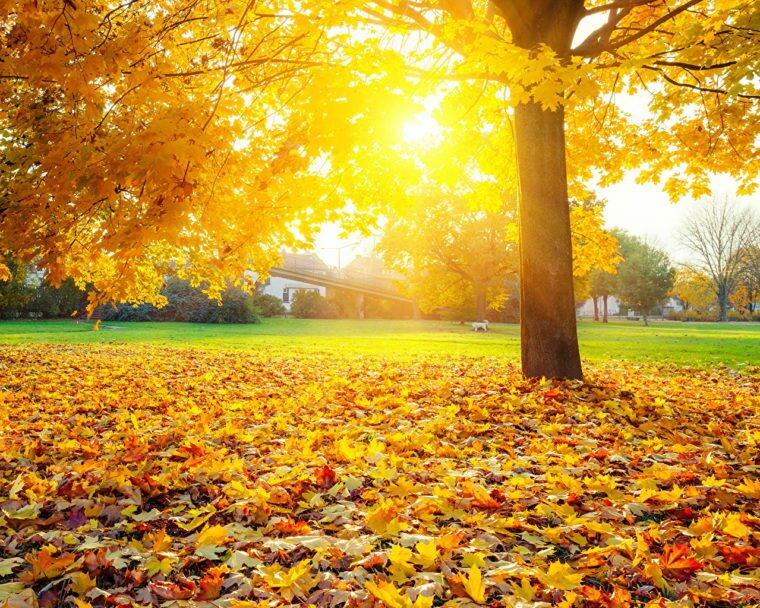

For several weeks in the fall, you can observe the phenomenon of the leaves on trees and shrubs changing color from green to yellow and even red.
Natural Dyes
Plant leaves are green because they contain 🌳 chlorophyll—a pigment found in plant cells. When cells contain large amounts of chlorophyll, its green color dominates, overshadowing the colors of any other pigments that may be present in the leaf. This is why leaves have their characteristic green color in the summer.
In addition to chlorophyll, there are other organic compounds in nature that contribute to the coloration not only of plant leaves but also of vegetables, animals, birds, and fish. These organic compounds are called pigments.
🌽 Carotenoids—give plants a yellow hue. Pumpkins and corn are colored by carotenoids.
🍊 Flavonoids—are responsible for the orange color. Onions, oranges, and sea buckthorn are rich in flavonoids.
🍅 Anthocyanins—these are the red, purple, and violet colors. They give red apples, tomatoes, and grapes their color.
What happens to the color of the leaves in the fall?
As summer comes to an end, daylight hours shorten and the average air temperature drops. Chlorophyll production slows down, and existing chlorophyll breaks down. As a result, other compounds present in the leaves come to the fore and affect the color of the leaves.
The brown color of the leaves is not caused by any pigment, but rather by the cell walls, which become visible when there are no visible pigments present.
Leaves fall due to a lack of water. Water in the soil freezes and cannot reach the plant roots, while the same amount of water evaporates from the leaf surface as it does in summer. Therefore, plants shed their leaves to prevent themselves from drying out.
Fun fact
The leaves of many plants exhibit a different type of color change: young leaves are red or purple and turn green later. This phenomenon is typical, for example, of red elderberry (Sambucus racemosa) and Japanese pieris (Pieris japonica). This phenomenon is associated with the high content of anthocyanins in young leaves; these pigments have the ability to convert light energy into heat, which is important for the plant’s development in early spring.